 By Zer0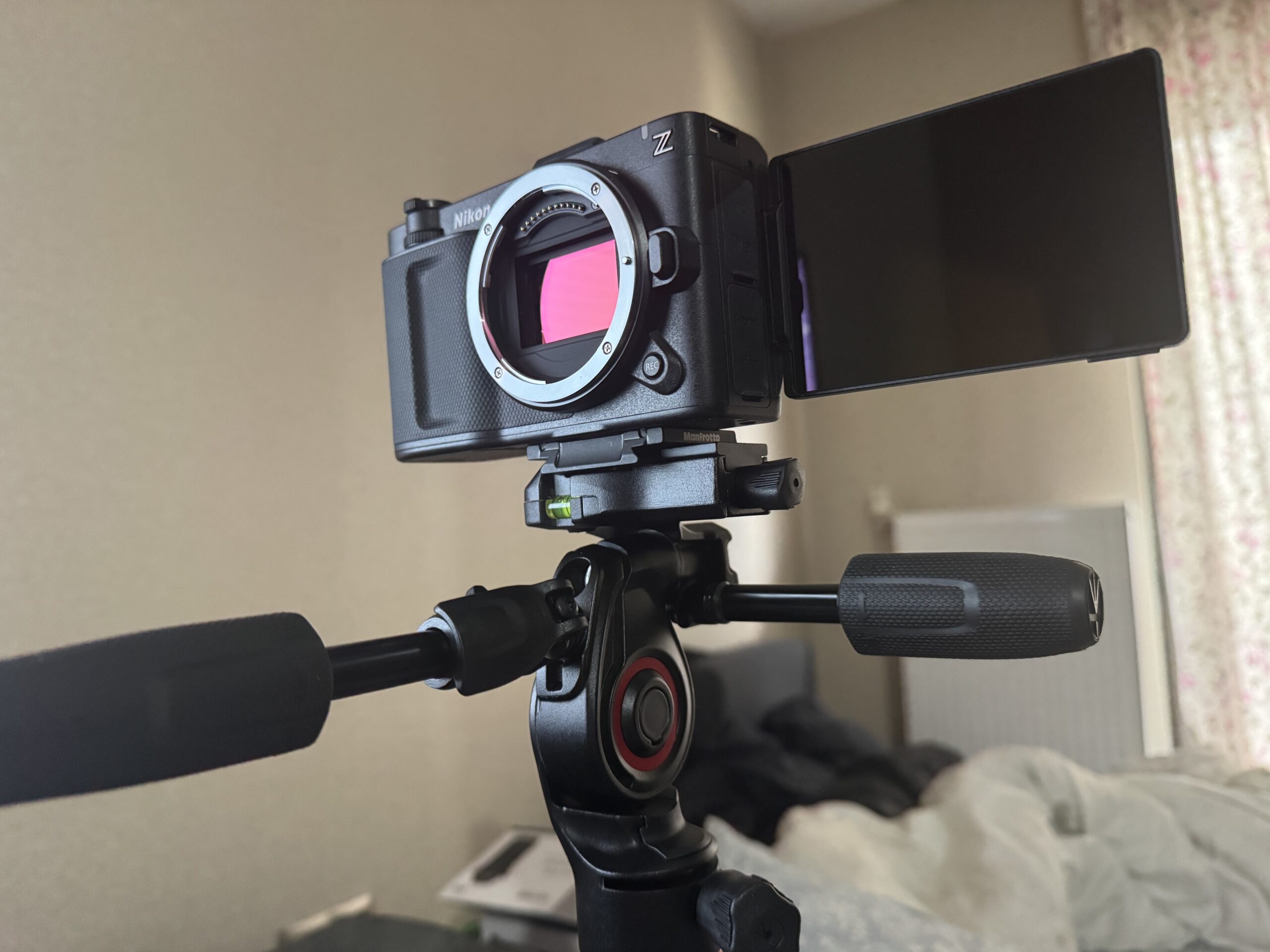
For the longest time, I watched cinematic videos on YouTube thinking there had to be some secret behind them.
The colors looked different.
The motion looked different.
Even random shots of buildings or trees somehow felt emotional.
And eventually I realized the answer was probably a mix of three things:
- lighting
- editing
- and people actually knowing what they’re doing
I’m still figuring out that third part.
But recently I bought my first proper video-focused camera setup, and honestly, it completely changed the way I look at filming.
My current setup is:
- Nikon ZR
- NIKKOR Z 24-70mm f/2.8 S II
- Viltrox AF 16mm f/1.8 Z
- Lexar Professional GOLD CFexpress Type B 1TB
- Manfrotto Befree Live 3-Way
And as someone who’s still somewhere between beginner and intermediate in videography, this setup feels both exciting and slightly terrifying.
Why I Chose the Nikon ZR
The Nikon ZR is kind of a weird camera in the best possible way.
It’s Nikon’s first cinema-focused camera developed together with RED after Nikon acquired them, so it feels like a hybrid between a mirrorless camera and a mini cinema camera.
What originally caught my attention was the fact that it can record internal RED RAW formats without needing an external recorder. That still sounds ridiculous to me considering how expensive RED cameras usually are.
The camera shoots:
- 6K up to 60fps
- 4K up to 120fps
- Full HD up to 240fps
- internal RAW formats including R3D NE and N-RAW
As someone still learning color grading, having access to RAW video is both amazing and overwhelming.
RED RAW File Sizes Are… Insane
I knew RAW video files were large.
I did not understand HOW large until I started actually recording with this thing.
The moment you start shooting 6K RED RAW footage, storage disappears frighteningly fast. Suddenly, 1TB doesn’t sound massive anymore.
That’s why I ended up getting the Lexar Professional GOLD CFexpress Type B 1TB.
And honestly, even with that card, I already catch myself thinking:
“Wait… am I going to need another one?”
The good thing is the flexibility in editing is incredible. Being able to recover highlights, adjust white balance later, and push colors around without the footage immediately falling apart feels completely different compared to compressed footage I used before.
The bad thing is my SSD storage is now fighting for its life.
The Image Quality Feels Unreal Sometimes
This is probably the first camera I’ve owned where I occasionally stop and think:
“Wait… I shot that?”
The dynamic range on the ZR is honestly one of the things that surprised me most. Bright skies and darker shadows hold together way better than I expected, especially during sunrise or sunset shots. Nikon and RED both advertise over 15 stops of dynamic range depending on format and workflow.
And even though I’m still learning color grading properly, the footage already has this softer cinematic look straight out of camera that feels very different from action cameras or phones.
I also really like how natural architecture looks on it.
Concrete textures, reflections on glass buildings, rainy streets at night, old abandoned structures, trees moving in the wind… this camera makes me want to go outside specifically to look for shots.
Which I guess is a good sign.
My Favorite Lens Right Now Is Probably the Viltrox 16mm
The Viltrox AF 16mm f/1.8 Z has honestly been ridiculously fun to use.
Because it’s so wide, it works perfectly for:
- cinematic architecture shots
- handheld walking shots
- nature scenes
- vlogs
- low light city footage
Wide lenses just make movement feel more immersive.
You can walk through spaces and actually feel the environment around you instead of flattening everything.
At the same time, the NIKKOR Z 24-70mm f/2.8 S II feels much more versatile overall. It’s the lens I use when I want cleaner compositions or more controlled shots.
The 24-70 honestly feels like cheating sometimes because it works for almost everything.
I’m Slowly Learning That Camera Movement Matters More Than Resolution
When I first got interested in videography, I obsessed over specs.
6K.
RAW.
Bit depth.
Dynamic range.
Color science.
And those things absolutely matter.
But the more I shoot, the more I realize movement and composition matter even more.
A slow tripod shot during sunset can feel more cinematic than chaotic handheld footage shot in the highest possible resolution.
That’s also why I got the Manfrotto Befree Live 3-Way.
I originally thought tripods were boring. Now I’m starting to appreciate controlled motion way more. Slow pans, locked shots, careful framing… they completely change the mood of footage.
Especially for architecture and nature shots.
I Still Feel Like a Beginner
I think one thing people don’t talk about enough is how awkward the learning phase feels.
You buy a nice camera.
You watch filmmaking videos for hours.
You learn about LOG footage and LUTs and shutter angle and color spaces.
Then you go outside and your footage still somehow looks like “guy walking around with expensive camera.”
I’m still very much in that stage.
But at the same time, that’s what makes it fun.
Every time I go out filming, I come back understanding something slightly better than before. Sometimes it’s lighting. Sometimes it’s camera movement. Sometimes it’s realizing I accidentally shot everything in the wrong frame rate.
Progress is progress.
And honestly, the Nikon ZR feels like one of those cameras I can grow into instead of immediately outgrowing.