 By Zer0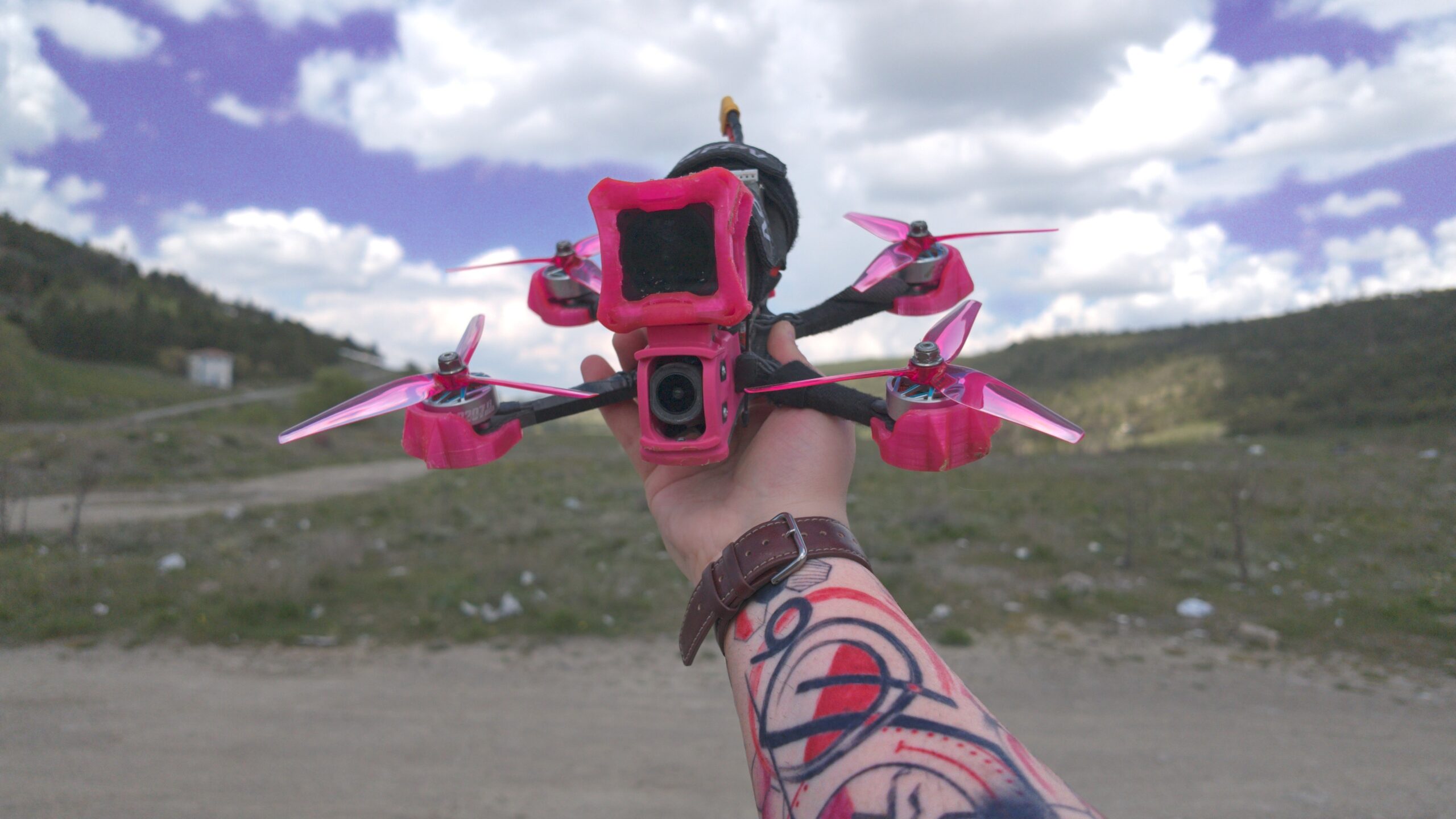
FPV stands for First Person View. Instead of flying a drone by looking at it from the ground, the pilot wears goggles that show a live video feed directly from the drone’s camera. You’re not watching the drone anymore — you’re sitting inside it. That’s the whole magic of FPV.
The first time you fly one properly, your brain kind of forgets you’re standing still. You dip between trees, skim across the ground, dive buildings, thread gaps barely wider than the drone itself… and it feels less like controlling a machine and more like becoming one for a few minutes.
That feeling is why FPV became its own world.
FPV Drones Are Not “Normal” Drones
When most people think of drones, they think of camera drones like the DJI Mavic series. Those drones are designed to be stable, smooth, and safe. You let go of the sticks, and they stop themselves in the air. They avoid obstacles. They practically fly themselves.
FPV drones are the opposite.
Most FPV drones fly in something called Acro Mode, where there’s no self-leveling and no GPS stabilization helping you stay upright. Every movement is manual. If you tilt forward, the drone keeps moving forward until you correct it.
That sounds terrifying at first — because it is.
But it’s also what gives FPV its freedom.
A normal camera drone feels like operating a machine. An FPV drone feels like movement itself.
Why FPV Footage Looks So Different
If you’ve ever watched a video where the camera dives down a skyscraper, chases cars through tight roads, flies through abandoned buildings, or glides inches above water at insane speed, there’s a good chance it was FPV.
Traditional drones are built for stable cinematic shots. FPV drones can do that too, but they can also do things helicopters, cranes, and handheld cameras simply can’t.
That’s why FPV exploded in filmmaking over the last few years. Suddenly, one pilot could create shots that used to require entire production teams.
But FPV isn’t only cinematic flying.
There are different corners of the hobby:
Freestyle — tricks, dives, power loops, aggressive flying
Cinematic FPV — smooth, controlled shots for videos and films
Racing — pure speed through tight courses
Long Range — flying kilometers away through mountains or landscapes
Bando Flying — exploring abandoned places full of concrete, steel, and questionable life choices
Most pilots end up mixing styles over time.
Crashing Is Part of the Hobby
One thing people don’t realize until they get into FPV: crashing is normal.
Actually, crashing is guaranteed.
FPV drones are fast, powerful, and usually flown very close to obstacles on purpose. Trees, concrete walls, metal beams, abandoned factories — they all become part of the learning process eventually.
That’s why most FPV drones are built from carbon fiber and individual replaceable parts. You don’t usually throw the whole drone away after a crash. You repair it, replace an arm or motor, and send it back into the air again.
In a weird way, FPV ends up teaching patience as much as flying.
You learn electronics.
You learn troubleshooting.
You learn soldering.
And occasionally, you learn that concrete always wins.
It’s More Than Just Flying
The interesting thing about FPV is that it pulls people from completely different worlds together.
Some people come from gaming.
Some from filmmaking.
Some from engineering.
Some from RC hobbies.
Some just saw one cool video online and fell into the rabbit hole.
And once you’re in, you realize FPV is half flying and half building.
Pilots obsess over frame geometry, motor KV, antenna placement, PID tuning, battery performance, camera latency, propeller grip, flight feel — tiny details most people would never notice.
But that’s also part of the charm.
Every drone feels personal because most of them are literally built by hand.
So… What Is
an FPV Drone?
Technically?
It’s a manually controlled drone flown through a live video feed.
But honestly, that definition misses the point a little.
An FPV drone is somewhere between a camera, a race car, a video game, and a very expensive bad idea.
And once you experience flying one properly for the first time, regular drones start feeling strangely… disconnected.